Wearable Dog Tech That Tracks Activity, Sleep, and Recovery
Last updated
PetTech Small business Startups AI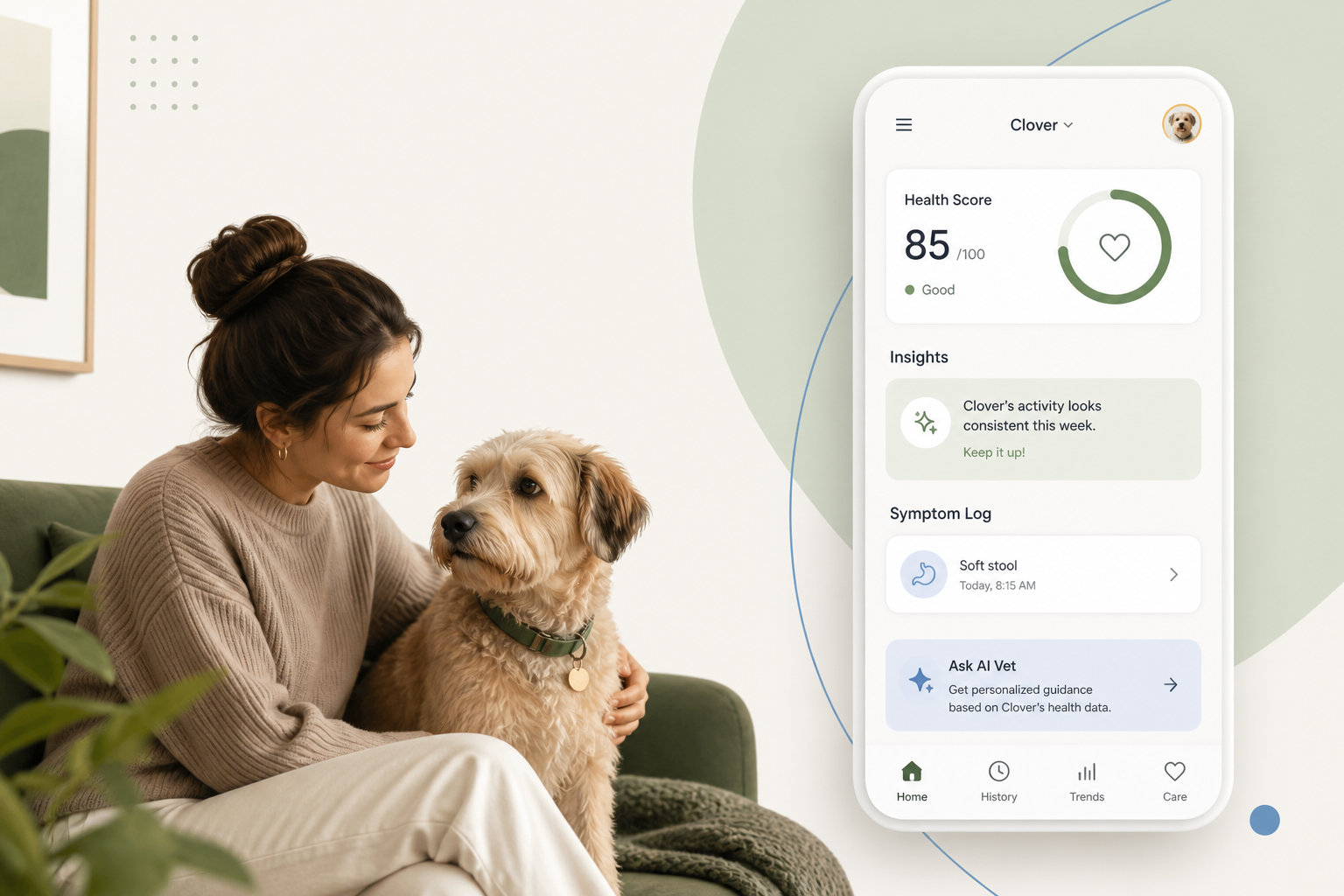
Wearable dog technology is becoming more visible because it solves a simple problem: dog owners cannot directly measure what their dog is doing all day, all night, or between veterinary visits. A dog may seem “fine” in the moment while still moving less, sleeping poorly, or recovering more slowly than usual. That is why wearables are interesting. They create a record of patterns that are otherwise easy to miss.
In 2026, the most relevant wearable dog devices are not the futuristic ones that promise everything at once. The most useful devices are the practical ones that track activity, rest, sleep, and sometimes recovery-related signals such as intensity of movement, posture, heart rate, respiration, or temperature. Depending on the device, they may be worn on a collar or harness and sync data to a phone app or cloud dashboard. Their value is not that they diagnose disease. Their value is that they help owners notice change earlier and discuss it more clearly with a veterinarian.
That distinction matters. A wearable can tell you that a dog is less active than last week, sleeping more than usual, or taking longer to return to a baseline routine after exercise or illness. It cannot tell you why without context. Less movement might reflect pain, boredom, stress, heat, age, illness, or a change in routine. Good wearable tech makes those patterns visible; it does not replace clinical judgment.
This is why wearable dog tech is best understood as an observation tool rather than a medical solution. It is useful because many important canine health changes happen gradually. Dogs cannot explain that they feel stiff, tired, or unsettled. Owners often notice only the most obvious behaviors. A wearable helps fill in that gap by showing what the dog does when nobody is actively watching.
What Wearables Are
Wearable dog tech refers to devices worn on a dog’s body, usually around the neck or attached to a harness, that collect data about movement and sometimes other biologic signals. The most common type is an accelerometer-based device. Accelerometers detect movement, which can then be translated into activity levels, rest periods, or sleep estimates. More advanced products may also estimate heart rate, respiratory rate, body position, temperature, or energy expenditure.
The basic idea is straightforward. Instead of relying only on an owner’s memory or a short observation during a clinic visit, the device collects repeated data over hours or days. That creates a more objective picture of routine behavior. In practice, this means the owner can see whether the dog’s movement is stable, rising, falling, or changing in relation to exercise, rest, travel, medication, aging, or illness.
Studies in dogs have shown that collar-mounted accelerometers can detect movement states and rest states with meaningful accuracy. One external validation study found strong performance for several behaviors, including sleep and static inactivity, using a collar-mounted triaxial accelerometer in healthy dogs. External validation study Other studies suggest that wearable sensors can be useful for monitoring sleep and rest periods in domestic dogs and may be practical for long-term observation in home environments. Sleep behaviour study Actical study
That makes wearables useful for trend monitoring. They are not perfect. They are, however, increasingly capable of showing meaningful changes in everyday life.
Studies on Wearable Dog Tech
The science behind wearable dog tech is still developing, but it has moved beyond pure novelty.
One of the clearest findings is that movement sensors can meaningfully distinguish between active and inactive states. In a validation study of a collar-mounted triaxial accelerometer, researchers reported high accuracy for several behaviors, including sleep and static inactivity. External validation study That matters because it shows the technology can do more than count motion. It can help categorize behavior patterns in ways that are clinically relevant.
Another study compared wearable technology with direct behavioral observation in domestic dogs and found that wearable sensors were a useful and less time-consuming method for assessing sleep behavior. The agreement between wearable data and observed data was generally strong enough to support their use in welfare assessment, especially when the goal is repeated monitoring over time rather than a single perfect measurement. PubMed sleep behaviour study
A more recent pilot study explored whether a collar-mounted accelerometer could help document sleeping and resting periods in individual dogs. The authors found that zero movement counts were strongly associated with sleep and rest states in their sample and concluded that the device had potential as a clinical tool for monitoring sleep and resting behavior in dogs. Actical study
Other research has expanded the picture beyond movement alone. Studies have explored smart collars that monitor heart rate, respiratory rate, posture, and activity simultaneously. PetPace comparison study A 2025 study evaluated heart rate measurements from a smart collar against 24-hour Holter monitoring and found that continuous heart rate tracking may be a viable long-term option in healthy dogs, although device performance and agreement still depend on the context. Heart rate study
There is also evidence that wearable devices are being used in more specialized settings. For example, remote monitoring has been studied in dogs with pruritus, where a collar-mounted accelerometer helped track scratching, shaking, sleeping, activity, and resting over time at home. Pruritus monitoring study That is important because it shows the technology is not limited to fitness tracking. It can also support disease management.
The broader scientific pattern is consistent. Wearables are most useful when they are used to track trends, support home monitoring, and add objective information to a clinical conversation.
What Wearables Can Measure
Wearable dog tech can measure more than many owners realize, but the exact outputs depend on the device.
The most common measurement is activity. This may include total movement, active minutes, steps, intensity of movement, or simple rest-versus-movement states. For an owner, this is often the easiest and most immediately useful data point because changes in activity are easy to interpret. If a dog consistently walks less, plays less, or becomes less active overall, something has likely changed.
The next major category is sleep or rest. Some devices estimate sleep duration, rest time, rest quality, or interruptions in the sleep-wake cycle. Research suggests that activity monitors can be useful for sleep assessment in dogs, even though they do not replicate full polysomnography. Sleep questionnaire study Actical study This matters because sleep is not just downtime. It is a behavioral and physiological state that can change when a dog is uncomfortable, anxious, aging, or recovering from illness.
Some devices also estimate recovery-related metrics. These may not always be labeled explicitly as “recovery,” but they often reflect it indirectly through patterns in movement, sleep, posture, or biologic strain. Recovery data may help show whether a dog is returning to a baseline after exercise, surgery, an injury, medication change, or illness.
Some advanced collars attempt to measure:
heart rate
heart rate variability
respiratory rate
temperature
position, such as lying, sitting, or standing
calories expended
scratching or shaking behavior in certain conditions
These additional signals may be useful, but they also introduce more complexity. More data is not automatically better if the device is not validated, the algorithm is opaque, or the owner does not know how to interpret the output.
What matters most is not how many metrics the wearable offers. It is whether the metric is meaningful, repeatable, and useful over time.
Why Activity Tracking Matters
Activity tracking matters because movement is one of the earliest visible signs of health change in dogs. Owners often notice only when a dog clearly limps, refuses a walk, or stops playing. Wearables can identify a softer version of the same problem much earlier.
A dog that is moving less may not be lazy. It may be uncomfortable. It may be fatigued. It may be gaining weight. It may be experiencing a change in mood, heat tolerance, environment, or daily routine. In that sense, activity is a broad health signal rather than a single diagnosis.
This is one reason activity tracking is so useful for senior dogs. Mild reductions in movement are easy to dismiss as normal aging, but a wearable can show whether the decline is gradual, sudden, or linked to a specific change. The same is true after exercise, travel, boarding, surgery, or a medication adjustment. The owner can see whether the dog is returning to normal or drifting away from it.
Activity data is also helpful for weight management. A dog on a weight-loss plan may appear to be “doing okay,” but the wearable can reveal whether movement is increasing, stable, or dropping. That gives the owner and veterinarian a clearer sense of whether the plan is working.
The important point is that activity tracking turns a vague impression into a measurable trend. Instead of saying, “I think she has slowed down,” the owner can say, “Her activity has dropped for the last two weeks.” That is much more useful in practice.
What Sleep Tracking Means
Sleep tracking in dogs is not the same thing as human sleep tracking, and it should not be treated as if it were.
Most dog wearables do not measure sleep with laboratory precision. They usually estimate sleep or rest using movement patterns, and sometimes additional data such as posture or heart rate. Even so, these estimates can still be valuable. Studies have shown that wearables and sleep questionnaires can help monitor companion dog sleep in ways that are practical and clinically useful. SNoRE 3.0 study Sleep behaviour study
Why does sleep matter so much?
Because sleep is one of the first things to change when a dog is uncomfortable, stressed, or aging. A dog that is restless at night may be dealing with pain, anxiety, environmental disruption, digestive discomfort, respiratory issues, or another underlying problem. A dog that sleeps much more than usual may also be signaling that something has changed, although that change may be subtle.
Sleep tracking is especially useful in:
senior dogs
anxious dogs
dogs with chronic pain
dogs recovering from surgery or illness
dogs with neurologic conditions
dogs living in noisy or unstable environments
The value of sleep data is not simply that it tells you how long a dog slept. It helps show whether the sleep pattern itself changed. A dog may still sleep for many hours, but if that sleep is fragmented or restless, the pattern may be more informative than the total duration.
This is why sleep tracking belongs in the discussion of wearable dog tech. It gives owners a window into a state they usually cannot see.
Why Recovery Matters
Recovery is where wearable dog tech becomes especially interesting.
Recovery is not just about whether a dog can still move. It is about how the dog responds after movement, stress, surgery, or illness. Two dogs may complete the same walk, but one may return to baseline quickly while the other remains tired, restless, or quiet for much longer. That difference matters.
Wearables are useful here because recovery is often invisible in the moment. An owner may see a dog finish a walk and assume everything is fine. A device may show, however, that the dog’s activity falls sharply afterward, the sleep pattern changes overnight, or the overall rhythm becomes less stable.
That can be useful after:
orthopedic surgery
injury
weight-loss interventions
flare-ups of chronic disease
exercise conditioning plans
periods of reduced activity or rest
Recovery tracking is also valuable because it helps prevent overconfidence. Owners often judge recovery by how the dog looks during a good 10 minutes. A wearable helps show the whole day, which is a much better measure.
From a science perspective, recovery is really a pattern of return to baseline. The more clearly a device can show that return, the more helpful it becomes. This is why recovery-related monitoring is likely to keep growing as a trend. It aligns with how veterinarians think: not just “Did the dog do the thing?” but “Did the dog return to normal afterward?”
Why the Science Matters
The science behind wearable dog tech matters because the category is easy to oversell.
A smart collar sounds impressive. Activity tracking sounds precise. Sleep tracking sounds objective. But the truth is more nuanced. The best devices are useful precisely because they are limited. They measure patterns that are good enough to guide attention, not perfect enough to replace a diagnosis.
The research supports cautious optimism.
Studies have validated collar-mounted accelerometers for certain movement and rest states. Validation study Others have shown that wearables can support sleep assessment in dogs and may be practical in real-world settings. Sleep behaviour study Actical study Additional work has explored heart rate and other biologic data from smart collars, suggesting that long-term monitoring may become more useful over time. Heart rate study
At the same time, the literature also shows real limitations:
algorithms are not always transparent
performance varies by device
collar fit affects data quality
movement can be misread in some contexts
no wearable can explain the cause of a change on its own
That means the science supports using wearables as part of a broader observational strategy, not as a standalone answer.
The strongest scientific use case is simple:
establish a baseline
track changes over time
compare trends before and after a meaningful event
bring the pattern to a veterinarian when something changes
That is the practical value of the science. It helps turn vague concern into structured information.
Final Takeaway
Wearable dog tech that tracks activity, sleep, and recovery is useful because it helps owners see the patterns that matter most but are easiest to miss. The science suggests these devices can reliably contribute useful trend data, especially when the goal is monitoring rather than diagnosing. Activity tracking can reveal early changes in movement, sleep tracking can highlight rest disruption or quiet discomfort, and recovery tracking can show whether a dog is truly returning to baseline. The strongest version of this technology is not the flashiest one. It is the one that helps owners notice change earlier and discuss it more clearly with a veterinarian.