The Future of At-Home Pet Diagnostics
Last updated
AI PetTech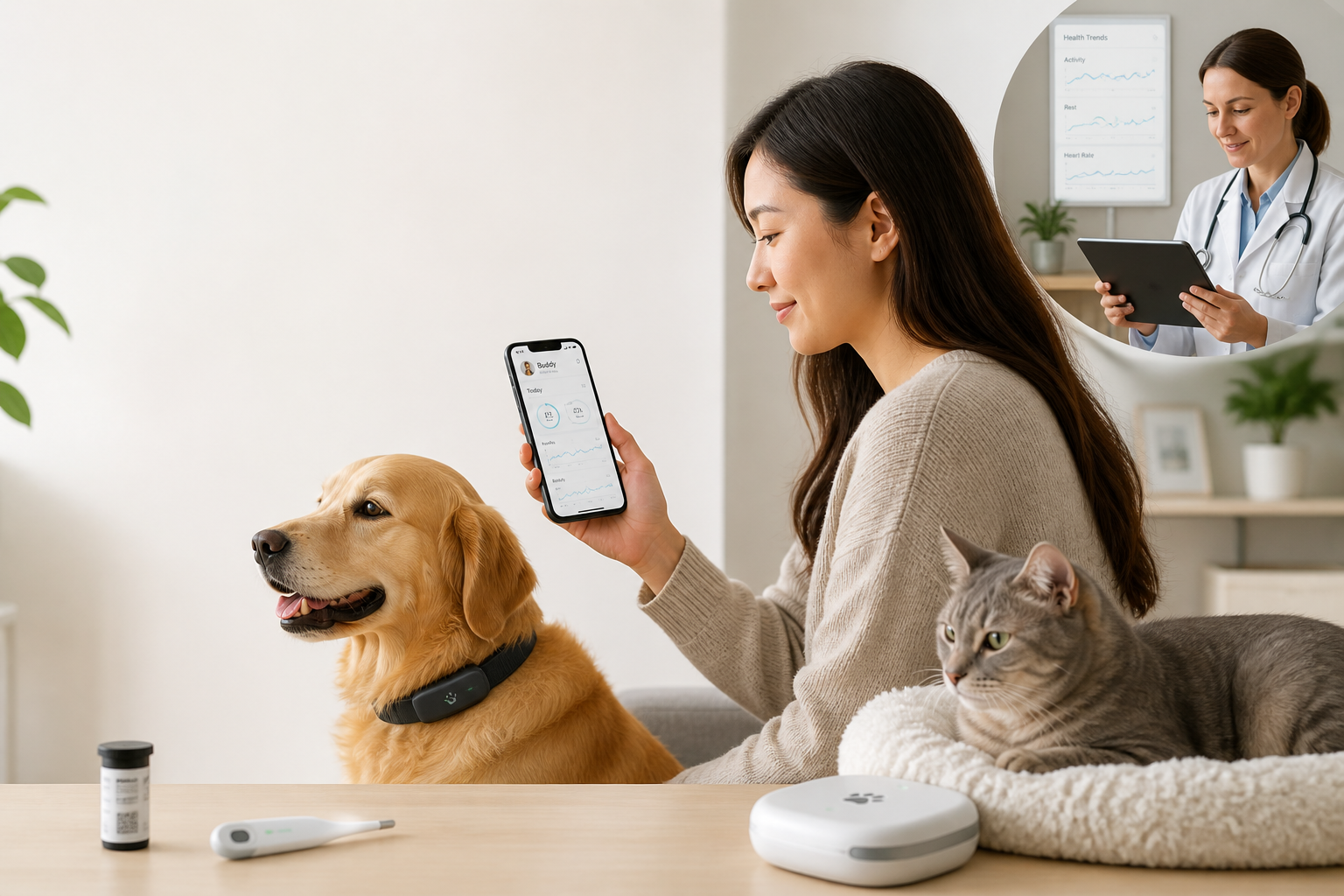
The future of at-home pet diagnostics is moving in a clear direction: more sampling at home, more interpretation through software, and more connection between owners and veterinary care. What used to require a clinic visit or a stressful in-person exam is gradually becoming easier to start from home. That does not mean pets will be diagnosed by gadgets alone. It means owners will increasingly be able to collect meaningful information earlier, more often, and with less friction.
This shift is happening because pet health problems are often noticed late. A dog may seem slightly off for days before the signs become obvious. A cat may hide changes in appetite, behavior, or litter box habits until the issue has already advanced. At-home diagnostics help narrow that gap by giving owners a way to check for patterns sooner. The FDA explains that home use tests can help detect possible health conditions when there are no symptoms and can also help monitor some conditions over time, while still making it clear that they should not replace periodic visits to a clinician.
That same logic is starting to appear in pet care. The future is not just “testing at home.” It is a broader diagnostic ecosystem where wearables, smart cameras, sample kits, and AI-based interpretation work together. In 2026, the strongest trend is not a single device. It is the convergence of multiple tools that make pet health more visible outside the clinic. The FDA’s overview of animal devices is useful here because it shows that diagnostics for animals are still regulated as medical devices when they are intended to diagnose or affect health outcomes.
One major part of this future is sample-based at-home testing. Companies are already marketing kits that let owners collect samples from home and receive a structured report afterward. Some focus on gut health or parasite screening, while others claim broader biomarker analysis. The more reliable versions of these tools will likely resemble human home-use diagnostics in one important way: they will work best when paired with clear instructions, validated methods, and a clinician who can interpret the result in context. The FDA’s IVD database shows how important regulatory classification and test validation are when diagnostics leave the clinic setting.
Another major trend is continuous monitoring. Wearables are already helping track activity, sleep, and recovery in dogs, and the same logic can support diagnostics by showing when something has changed before an owner notices it directly. A 2026 study on canine health monitoring described the value of combining wearable devices with mobile platforms for more routine and less stressful observation of dogs at home. Another 2026 paper showed that wearable devices could monitor heart rate and oxygen saturation in awake dogs with meaningful agreement, which points toward a future where more biometric data can be collected outside the clinic. Accuracy and agreement of a wearable device for heart rate and oxygen saturation monitoring in awake dogs
That matters because diagnostics are not just about one measurement. They are about patterns. A single reading may not mean much, but repeated readings can show change. If a pet’s heart rate, movement, rest, appetite, or breathing pattern shifts over time, the owner and veterinarian may have a much better starting point for investigation. In other words, the future of at-home diagnostics is likely to be more longitudinal and less episodic.
AI will make that process easier to use. A raw result is only useful if someone can understand it. AI systems can summarize, compare, flag trends, and explain what a result may mean in plain language. That does not make the AI the diagnostician. It makes it the interpretation layer. This is where the real value lies. For many pet owners, the problem is not lack of data. It is uncertainty about what to do with the data. AI can help turn a sample result, wearable trend, or symptom log into next-step guidance that is easier to act on.
The strongest future use case is not fully autonomous diagnosis. It is triage plus context. An owner collects a sample or sees a concerning trend at home. The system helps determine whether the issue is minor, whether it should be monitored, or whether it needs a veterinary visit now. That is a better model than expecting at-home diagnostics to replace the clinic. The FDA makes a similar point for human home-use tests: they can help, but they should not replace regular professional care. Home use tests
The future also depends on data quality. At-home diagnostics only work if users collect samples correctly, devices are calibrated, and algorithms are validated against real outcomes. That is why the most credible products will likely be the ones that are modest in their claims. The field will grow, but the winners will probably be the tools that are careful about what they can and cannot say. The more a company promises instant answers, the more skepticism it deserves. The more it shows validation, transparency, and clear next steps, the more useful it is likely to be.
There is also a behavioral advantage to at-home diagnostics. Pets are often calmer at home than in a clinic, and that can produce better measurements in some cases. The 2026 canine monitoring paper noted that traditional veterinary measurements can be stressful for dogs, which is one reason home-based monitoring is appealing. Development of an Integrated IoT Wearable and Mobile Platform for Canine Health Monitoring Less stress can mean more natural readings, more frequent checks, and a better picture of everyday health.
So what does the future actually look like? Probably a layered system: wearables tracking movement, sleep, heart rate, and recovery; home sample kits testing for targeted conditions; AI summarizing the results; and veterinarians using those reports to decide what to do next.
That is the most realistic version of the future. It is not a world where pets diagnose themselves. It is a world where owners have better tools to notice change, collect data, and ask better questions sooner.
The biggest benefit is earlier awareness. The biggest risk is overtrust. At-home diagnostics will be powerful when they help owners act sooner, but they will be harmful if people treat every result as final. The future of pet diagnostics is not fewer veterinarians. It is better information reaching veterinarians earlier.