How Tech Can Help Detect Early Signs of Illness in Pets
Last updated
AI PetTech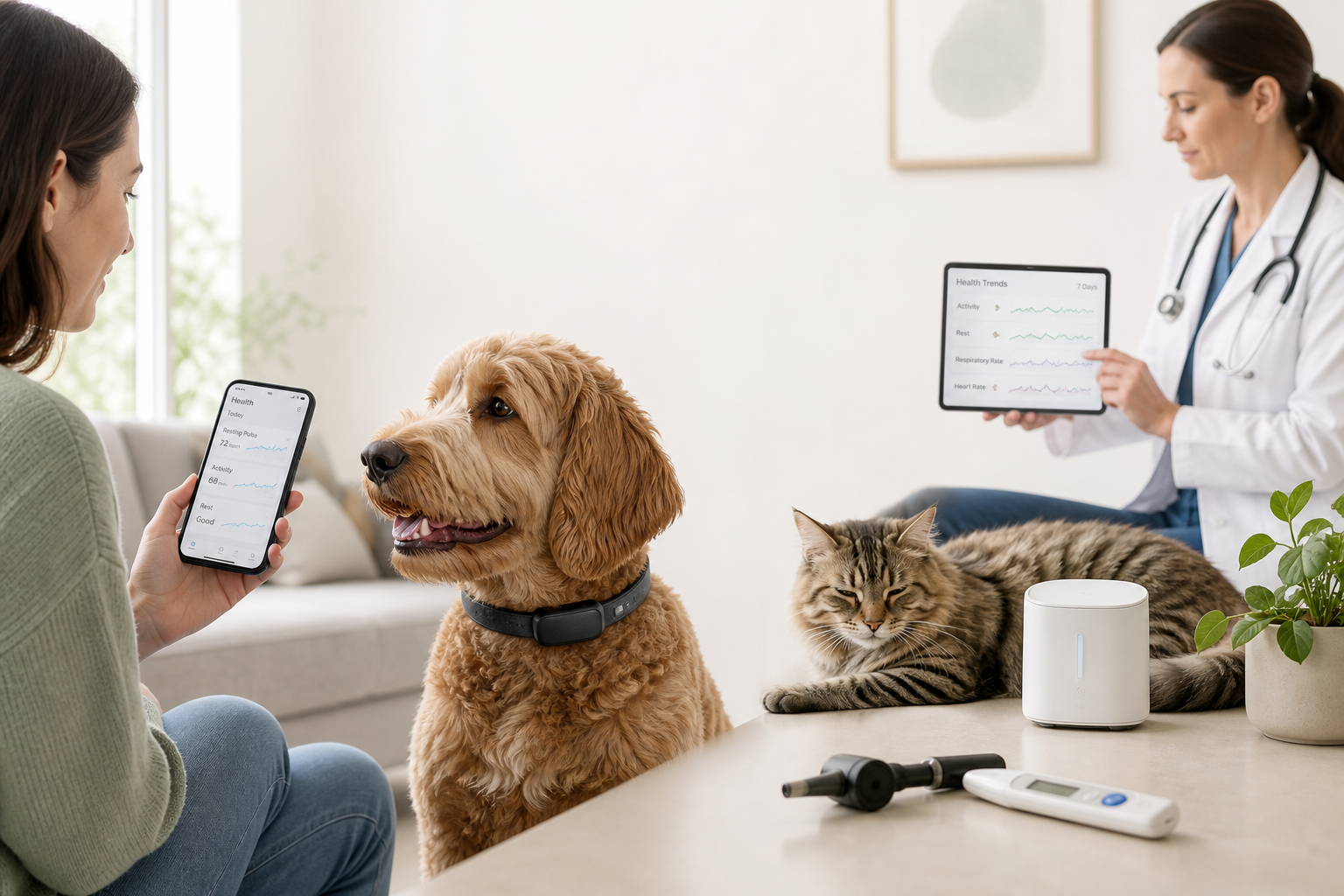
Technology is making it easier to notice when a pet is not quite right. That matters because many illnesses in dogs and cats begin with subtle changes that are easy to miss in daily life. A pet may eat a little less, sleep differently, move more slowly, scratch more, or simply seem “off” before anything obvious looks wrong. At-home tech does not replace a veterinarian, but it can help owners catch those early changes sooner. The NIH’s wearable sensor work shows why this matters in principle: continuous monitoring can reveal changes in vital signs or patterns that may point to illness earlier than a person would notice on their own.
The biggest advantage of tech is that it turns behavior into data. A person’s memory is imperfect, especially when changes are gradual. A wearable, smart collar, home camera, or app can track activity, sleep, recovery, eating patterns, and sometimes heart rate, respiration, or temperature over time. That means an owner does not have to rely on a vague feeling that something changed. They can look at a trend. That is useful because early illness often shows up as a trend before it becomes a crisis.
Wearable devices are especially promising. In dogs, research has shown that continuous monitoring can help detect shifts in activity and rest patterns that may line up with health problems. A 2026 exploratory case series in PubMed found that a wearable sensor system could detect real-time deviations in activity and rest in dogs with osteoarthritis, and in one case the decrease in activity appeared before the owner noticed a problem. Continuous Activity Monitoring Using a Wearable Sensor in Dogs with Osteoarthritis Another study on pruritus alerts found that wearable data and digital alerts could improve owner recognition of scratching-related problems and increase the likelihood of a veterinary visit. Pruritus alert study That is a good example of how tech can help turn a subtle sign into an action sooner.
AI makes this more useful because it can help interpret the data. Raw numbers are not the same as insight. A pet activity graph is helpful only if someone can understand whether the change is normal, temporary, or worth checking. AI tools can summarize trends, flag unusual behavior, and compare current patterns with previous ones. In pet care, that is especially useful because owners often need help deciding whether a change is minor or whether it deserves attention. AI does not diagnose the pet on its own, but it can help organize the question well enough for a veterinarian to answer.
The idea is not limited to dogs. Cats often hide illness even more effectively, which is why tech can be especially valuable for them. A cat may stop jumping, eat less, or sleep differently long before the owner realizes there is a problem. Home monitoring tools can catch those changes because they look at repeated patterns instead of just one moment. That makes the data more useful for spotting trends like reduced movement, interrupted sleep, or altered recovery after a stressful event or illness.
Temperature and respiratory monitoring are also becoming more relevant. Some studies have explored noninvasive monitoring of dogs for early fever detection. For example, a veterinary conference report described continuous wireless monitoring as a way to identify fever earlier in dogs, especially where frequent manual temperature checks are difficult. Continuous, Noninvasive, Wireless, Remote Monitoring of Skin Temperature in Dogs for Early Detection of Fever More recent wearable research has also looked at vital signs like heart rate and oxygen saturation in awake dogs, showing that this kind of monitoring is becoming more realistic outside the clinic. Accuracy and agreement of a wearable device for heart rate and oxygen saturation monitoring in awake dogs
Home diagnostics are another important piece of the future. The FDA explains that home use tests can help detect possible health conditions early and support monitoring over time, while still making clear that they should not replace professional care. In pets, that future may include sample kits, smart devices, and AI-assisted interpretation that help owners collect better information before going to the clinic. The FDA’s guidance on animal devices is a reminder that these tools still need validation and oversight if they are going to be trusted.
The most valuable role of technology is early awareness. If a device shows that a pet’s activity has dropped for several days, or sleep has changed, or a symptom pattern is repeating, the owner can seek help sooner. That is often the difference between a small issue and a bigger one. The tech does not need to be perfect to be useful. It just needs to be good enough to make the early signs harder to ignore.
That said, the limits matter. A wearable or app can show that something changed, but it cannot always explain why. Lower activity could be pain, boredom, heat, stress, or illness. More scratching could be allergies, skin irritation, or something else entirely. The best use of tech is to improve observation and give owners a better starting point, not to replace the exam, the bloodwork, or the veterinarian’s judgment.
The future of pet illness detection is likely to be layered. Wearables will track daily patterns. AI will summarize and flag changes. Home tests will add more direct diagnostic evidence. Veterinarians will use all of that information together to decide what happens next. That is the most realistic version of the future: more data from home, earlier awareness, and better decisions made sooner.