The Best Innovations in Dog Health Tech Right Now
Last updated
AI PetTech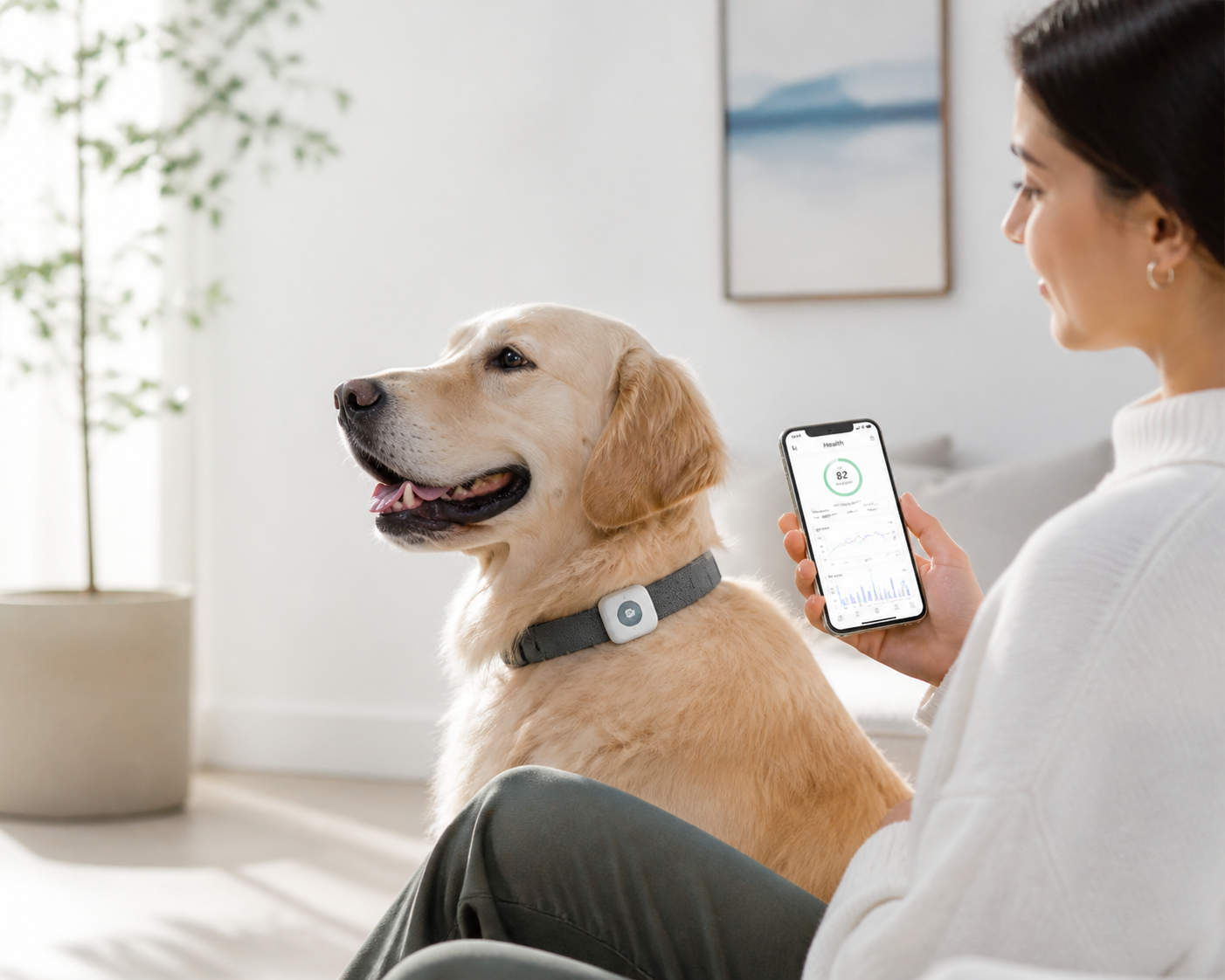
Dog health technology has moved far beyond simple GPS trackers and reminder apps. The most interesting innovations right now are the ones that help owners notice change earlier, understand their dog’s behavior more clearly, and support veterinary care with better data. That matters because many dog health problems begin quietly. A dog may move a little less, sleep a little differently, or show small changes in comfort long before anything looks urgent. The best new tools are designed to catch those patterns sooner.
One of the biggest innovations is the smart collar. Newer collars can do much more than track location. Some monitor activity, sleep, heart rate, respiratory patterns, temperature, and behavior changes over time. For example, the Link AKC Smart Collar combines safety features with activity monitoring and reminders, while newer AI-driven products like Traini’s Sentra smart collar are pushing into behavior analysis and multimodal sensing. That is a big shift. A collar is no longer just a tag and tracker. It is becoming a health sensor.
Another major innovation is AI-powered behavior monitoring. The value here is not just recording data. It is interpreting the data. A collar or camera may collect information about movement, posture, vocalization, or rest, but AI can help turn that into something useful. If a dog is less active, more restless, or recovering more slowly than usual, the system can flag the pattern. That is helpful because owners are often too close to the day-to-day routine to notice gradual change. A 2026 review on companion animal AI found that wearable sensors and video analysis are increasingly being used to support diagnosis, behavior analysis, and welfare monitoring.
This is especially important for early illness detection. A dog that seems “off” may not yet show obvious symptoms, but a monitoring system can reveal that movement, rest, or recovery has changed. Research on wearable monitoring in dogs continues to support this direction. A 2026 study using a wearable sensor in dogs with osteoarthritis found that continuous activity monitoring could detect real-time changes in activity and rest, including a decline that appeared before the owner noticed a problem. Continuous Activity Monitoring Using a Wearable Sensor in Dogs with Osteoarthritis That is exactly the kind of innovation that makes technology valuable: not replacing the veterinarian, but making the early signs harder to miss.
Home diagnostics are another important area. Instead of waiting for a clinic visit, owners are increasingly able to collect useful health information at home. That includes sample collection, remote monitoring, and app-based interpretation. The FDA’s home-use testing guidance shows why this direction matters: home tests can help detect conditions earlier and support ongoing monitoring, but they still need to be used carefully and should not replace professional care. In pet health, the future is likely to look similar. Owners collect more data from home, then bring a clearer picture to the vet.
The best innovations also include better diagnostic support tools. Wearable devices are becoming more capable of measuring heart rate, oxygen saturation, and other vitals outside the clinic. A 2026 study found that a wearable device could measure heart rate and oxygen saturation in awake dogs with meaningful agreement, suggesting that noninvasive home monitoring is becoming more realistic. Accuracy and agreement of a wearable device for heart rate and oxygen saturation monitoring in awake dogs That is a major step because pets are often more relaxed at home than in a clinic, which can make home data more useful and less stressful to collect.
Another innovation worth watching is AI-assisted dental screening. Dental disease is one of the most common hidden problems in dogs, and it is often easy for owners to miss until it is advanced. AI tools can help owners spot visible changes sooner. Mars launched GREENIES Canine Dental Check, an AI-powered tool that helps monitor canine dental health from a smartphone photo. That kind of tool is valuable because it makes preventive care more accessible. It does not replace a full dental exam, but it can help owners act earlier.
Feeding tech is also improving. Smart feeders and connected nutrition tools are helping owners manage portions, feeding schedules, and dietary consistency. In 2026, this matters because many health issues in dogs are connected to weight and routine. If a tool can make portion control more consistent, it can support better long-term health. While not every smart feeder is equal, the category reflects a bigger shift: pet care is becoming more data-driven and less guess-based.
One of the most meaningful innovations is not a single device but the combination of devices. The future of dog health tech is layered. A smart collar tracks movement and rest. An app interprets the pattern. A dental tool checks the mouth. A home test kit collects a sample. A veterinarian reviews the combined picture. That stack of tools creates a more complete view of a dog’s health than any one device can provide on its own.
That is why the best innovations in dog health tech right now are not flashy gadgets. They are tools that help owners notice change earlier, understand what their dog’s data means, and make better decisions with a veterinarian. The strongest products are the ones that improve prevention, reduce guesswork, and support care without pretending to replace it.