How Technology Is Changing Everyday Productivity for Busy People
Last updated
Small business Enterprise Digital transformation Startups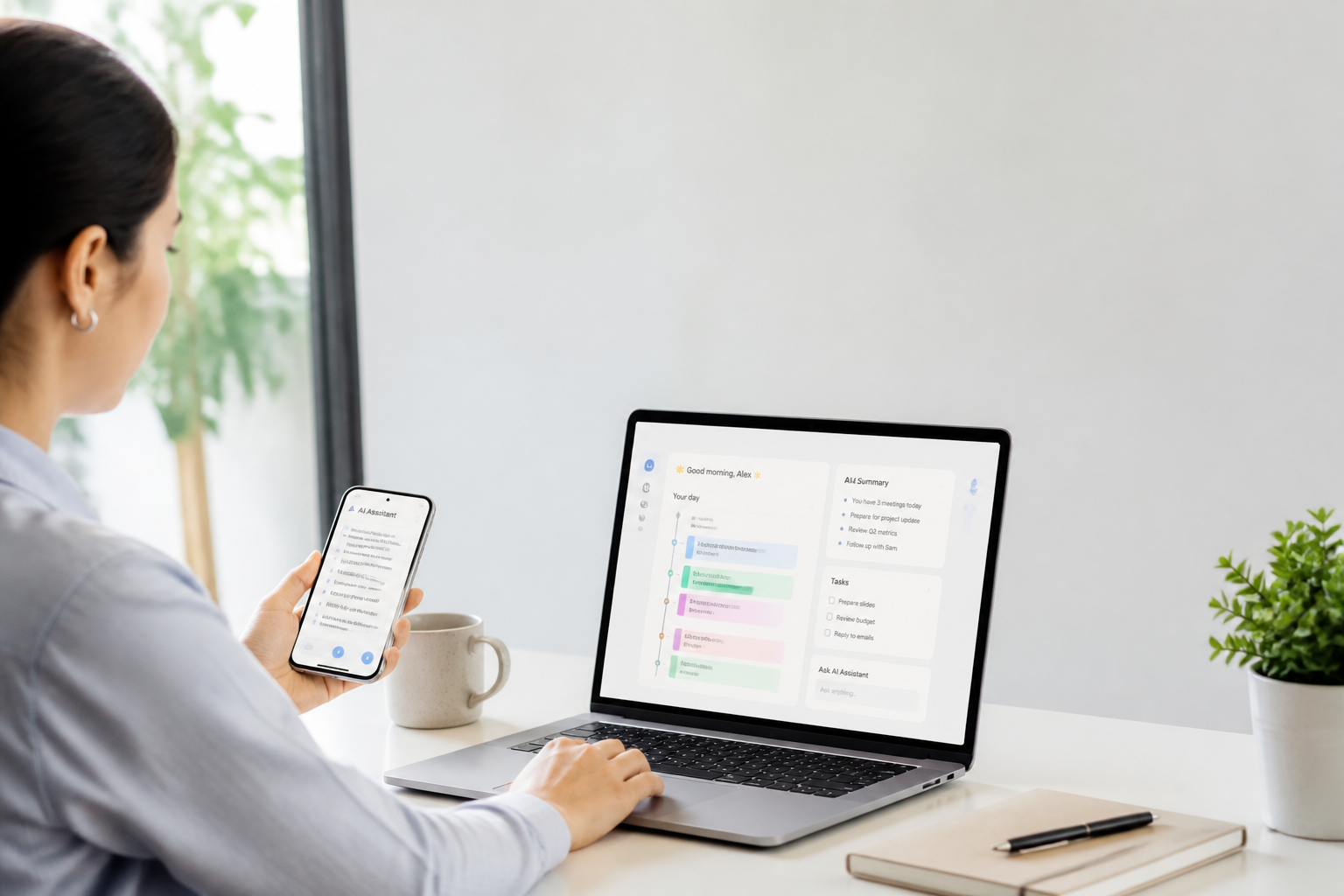
Artificial intelligence is no longer something people “try out” on the side. It is becoming part of the normal workflow for busy people who need to move faster, make fewer mistakes, and protect their attention. That shift is happening because the everyday problems of modern work are not usually about talent. They are about overload. People are juggling messages, meetings, documents, scheduling, research, and follow-ups, often all at once. AI is becoming the new norm because it helps reduce the friction in those small, repetitive tasks that consume so much time.
What used to take a long block of uninterrupted focus can now often be started with a prompt, a draft, or an automated suggestion. That does not mean technology replaces human judgment. It means the first pass is getting cheaper, faster, and easier. A manager can summarize notes in seconds instead of an hour. A freelancer can draft an email, outline a proposal, or organize tasks without starting from zero. A parent can use AI to plan meals, compare options, or sort information without spending the whole evening on it. The practical result is not just speed. It is a lighter cognitive load.
This is why AI is becoming normal in everyday productivity. It fits into the way people already work. It does not require a major behavior change to be useful. People use it to clean up writing, summarize documents, plan schedules, generate ideas, and turn messy information into something clearer. In many cases, AI acts like a quiet assistant in the background. It is not doing the whole job. It is removing the most tiring parts of the job.
The biggest change is in how people think about time. Busy people are no longer asking only, “Can I finish this?” They are asking, “Can I finish this without burning myself out?” AI is part of that answer because it helps people move from blank page to usable draft more quickly. It helps with triage, which is often the real bottleneck in a busy day. When a person has too many things competing for attention, the hardest part is often deciding what to do first. AI can help sort, summarize, and structure, which gives the person a better starting point.
It is also changing expectations. Tasks that once felt expensive in time now feel more manageable. Writing a first draft no longer has to be a major event. Creating a summary, translating content, extracting action items, or comparing options can happen much faster than before. That means productivity is becoming less about brute force and more about judgment. The human role is shifting toward deciding what matters, checking what the system produced, and refining the result.
Still, the new norm has limits. AI is helpful, but it is not magic. It can make mistakes, miss context, or sound more confident than it should. That means the best way to use it is as an accelerator, not as a substitute for thinking. Busy people who use it well tend to treat it like a smart first draft machine. They let it reduce the effort needed to begin, then they review, adjust, and finalize the result themselves.
The broader cultural shift is clear. AI is moving from a novelty to a utility, the same way search engines, cloud storage, and smartphones once did. At first, people used them occasionally. Then they became part of daily life. AI is now following that same path. For busy people, that means productivity is becoming more fluid, more automated, and more adaptive to the pace of modern life.
The new norm is not that AI does everything. The new norm is that people expect technology to help them start faster, think more clearly, and spend less energy on repetitive work. That is a major change in everyday productivity, and it is only going to become more normal from here.