AI-Powered Apps for Personalized Dog Health Insight
Last updated
PetTech AI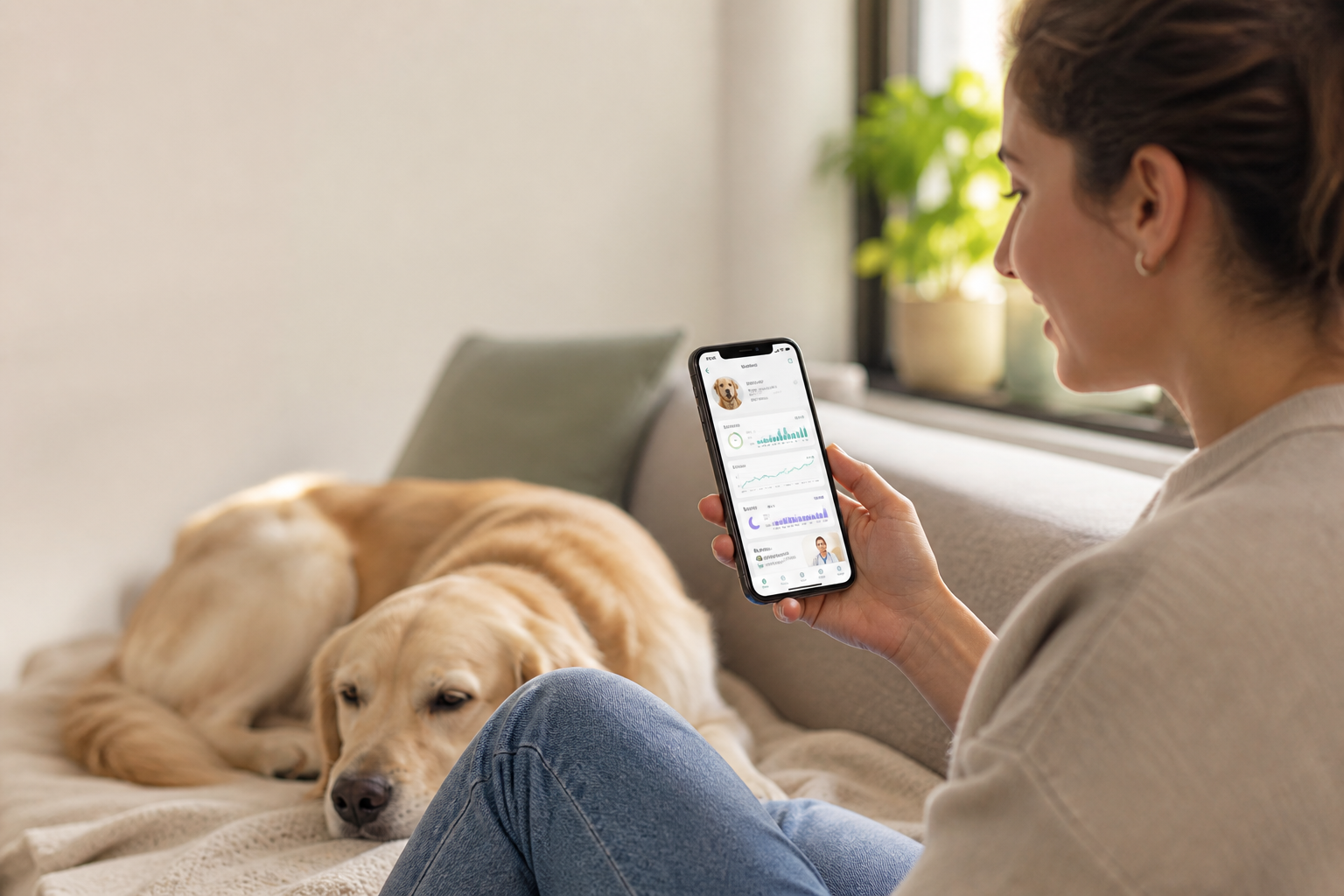
AI-powered dog health apps are becoming more common because they promise something owners have always wanted: clearer, more personal guidance between vet visits. Instead of searching generic symptom pages, an owner can enter details about their dog, upload a photo, log a symptom, or connect activity data and get an answer that feels more specific to that dog. In 2026, this category includes symptom checkers, health journals, activity trackers, food tools, medication reminders, and apps that try to combine several of those functions into one place. Public app listings now show a wide range of products claiming personalized insights based on breed, age, weight, medical history, photos, or tracked behavior.
The appeal is easy to understand. Dog health problems are often subtle at the start. A dog may eat a little less, sleep differently, scratch more, move less, or seem slightly “off” without any single obvious sign that explains the change. An AI app can help an owner organize those details, compare them over time, and decide whether the pattern looks minor, worth watching, or worth discussing with a veterinarian. That makes these tools useful not because they replace professional care, but because they help owners notice and describe changes more clearly.
What These Apps Are
AI-powered dog health apps are software tools that use machine learning, rule-based triage, large language models, or a combination of these systems to interpret pet-related information. Some are simple journals with a chat layer. Others analyze a symptom description, ask follow-up questions, and suggest urgency levels. Some are built around photos, some around records, some around behavior, and some around wearables or activity data. The name “AI-powered” does not tell you much by itself, because one app may only summarize your input while another may try to compare it against a broader knowledge base or a decision tree.
That is why personalization is such a big part of the category. A generic pet app might say, in effect, “here is what vomiting can mean in dogs.” A more personalized app tries to narrow the answer using the dog’s age, breed, size, history, and recent pattern changes. That extra context is what makes the output feel more useful.
But “personalized” is not the same as “reliable.” A more tailored answer can still be wrong, too confident, or incomplete if the underlying model is weak. The word sounds more advanced than it sometimes is. Owners need to know that the quality of the output depends on the quality of the data, the logic behind the app, and the amount of validation it has actually received.
What the Science Says
The science behind AI-powered dog health apps is still uneven, but the broader idea behind them is credible. Dogs do benefit from repeated health tracking, structured observation, and objective data when that data is used carefully. Research on canine wearables and activity monitors has shown that movement and rest patterns can be measured in useful ways over time, and that these data streams can help owners and clinicians detect changes that might otherwise go unnoticed.
There is also evidence that remote digital monitoring can help with specific health problems. In dogs with pruritus, for example, wearable monitoring has been used to track scratching, shaking, sleep, activity, and resting patterns in the home environment. That matters because it shows how digital tools can support real-world observation, especially when the issue is intermittent or difficult to describe from memory alone.
At the same time, the science does not yet support treating most consumer AI pet apps as diagnostic tools. A tool may be helpful for symptom journaling, triage support, or trend spotting, but that does not mean it can reliably identify the cause of a symptom or make a medical decision on its own. The evidence base is still growing, and many commercial products have not published the kind of validation studies that would let a veterinarian compare their output against gold-standard clinical assessment.
So the scientific picture is promising but cautious. These apps are useful when they help owners observe better and communicate better. They are not useful when they create the illusion that an algorithm has replaced medical reasoning.
Why Personalization Matters for Owners
Personalization matters because dog health is never truly generic. A young, active Labrador with a skin flare is not the same as a senior toy breed with dental disease, or a fearful rescue dog whose sleep pattern has changed after a move. The same symptom can mean different things depending on age, size, breed, environment, and prior health history. That is why owners are drawn to apps that can adapt their guidance to the dog in front of them instead of giving one-size-fits-all advice.
A good personalized app does not just say, “your dog may need attention.” It tries to explain why the detail matters. If the dog is older, that may change how the app frames changes in energy or mobility. If the dog has a history of digestive issues, the same stool change may be treated differently than it would for a healthy dog with no prior episodes. If the app also knows the dog’s weight or activity level, it may be able to give more relevant feeding or recovery context.
What owners really want from personalization is not sophistication for its own sake. They want relevance. They want an answer that reflects their dog’s actual life. That is why personalized dog health insights are appealing: they can reduce the feeling of guesswork and make the next step feel more grounded.
A well-designed app should do that by helping the owner recognize patterns, not by pretending to know everything. It should make the information feel more specific without making the user feel more confused. In practice, that means the app should explain what it is using, why it is asking certain questions, and how the answer should be interpreted. The best version of personalization feels practical and calm, not dramatic or magical.
What These Apps Cannot Do Well
The biggest limitation of AI pet health apps is that they can sound more certain than they should. A polished response can feel reassuring even when the underlying evidence is thin. That is risky because a dog app can only work from the information it has. If the owner gives incomplete details, if the photo is unclear, if the symptom is ambiguous, or if the condition is developing internally rather than externally, the app may not be able to tell the difference.
These tools also cannot replace a physical exam. They cannot palpate an abdomen, listen to the chest, assess hydration, check gum color properly, or interpret subtle pain signs the way a veterinarian can. They cannot diagnose complex conditions just because the owner described them well. They also cannot always distinguish between problems that look similar on the surface. A limp might be a soft tissue injury, a nail issue, a joint problem, or pain coming from somewhere else entirely. An app may narrow the field, but it should not be the final authority.
This is why the most dangerous failure mode is false reassurance. If an app tells an owner to “monitor at home” when the problem is actually urgent, the app has done harm by delaying care. The opposite can happen too: an app may flag a symptom as high concern when the situation is not truly serious, which can create unnecessary anxiety and vet visits. Both failures come from the same problem: confidence without enough clinical context.
The smartest way to think about these apps is as support tools. They are useful for sorting information, spotting trends, and preparing for a conversation. They are not substitutes for judgment, and they should never be treated as if they know more than the veterinary exam they are trying to support.
What a Good Dog App Should Actually Do
A good AI dog health app should feel less like a robot giving orders and more like a structured assistant that helps an owner think clearly. It should help the owner describe what they are seeing, store that information cleanly, and turn it into a useful timeline. If the dog has recurring vomiting, scratching, limping, restlessness, or changes in appetite, the app should help the owner notice whether the pattern is getting more frequent, more severe, or linked to a trigger.
It should also help the owner understand urgency without overclaiming. A well-made app should say when to watch, when to contact a veterinarian, and when a symptom is potentially urgent. It should make those distinctions carefully and explain the reasoning in plain language. If the app uses photos or videos, it should be transparent about what those images can and cannot tell it. If it uses breed or age, it should explain why those details matter. If it uses activity or sleep data, it should show how those patterns were interpreted.
Just as important, the app should make it easier to share information with a veterinarian. A clean timeline is often more valuable than a dramatic answer. A veterinarian can work with a record of symptom dates, changes over time, photos, medication history, or activity trends much more easily than with a vague memory of “something seemed off last week.” That is where good AI pet health software can be genuinely useful. It helps owners arrive better prepared.
In other words, the ideal app does not try to be the vet. It tries to make the vet conversation better.
Final Takeaway
AI-powered apps for personalized dog health insights are one of the more useful pet-tech trends in 2026 because they help owners organize information, notice patterns, and ask better questions. Their value is strongest when they improve context, not when they pretend to replace clinical judgment. Personalization matters because no dog is generic, but it only works when the app is honest about what it knows and careful about what it does not know. The best dog apps should help owners think more clearly, track changes more reliably, and share cleaner information with their veterinarian. That is the real promise of the category.